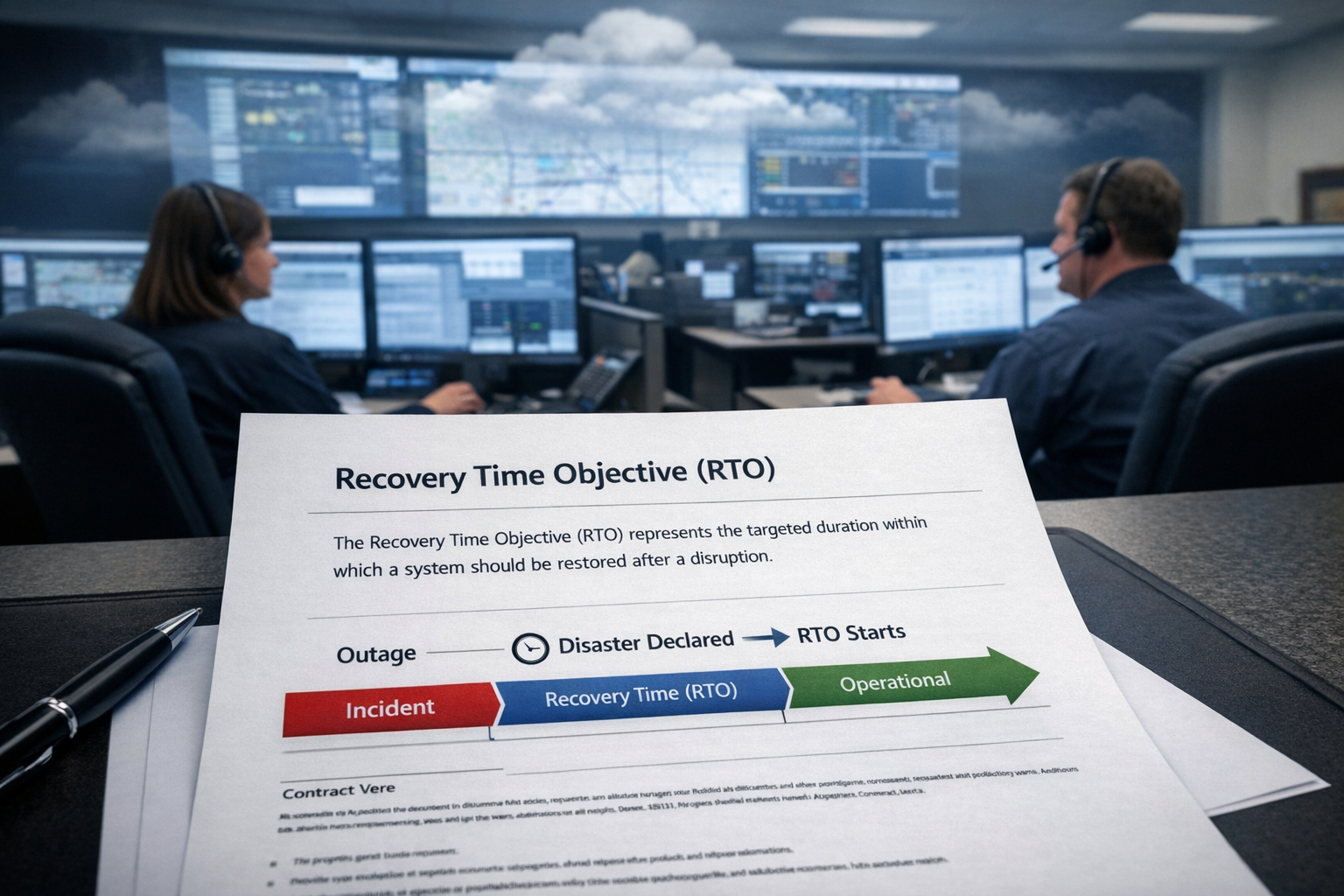
RTO is one of those terms that gets mentioned often, but not always understood the same way by everyone in the room.
At a high level, Recovery Time Objective is meant to define how quickly a system should be restored after a major disruption.
Simple in concept. More complex in practice.
Where RTO Is Defined Matters
One reason is that RTO is not always addressed in the SLA itself. Sometimes it appears in other contract documents, supporting exhibits, disaster recovery language, or technical appendices. That can make it easy for teams to assume they have a firm commitment when what they really have is a broader objective described somewhere else.
What Starts the Clock?
Another important consideration is when the recovery timeline actually begins.
In some environments, the timing may not start at the initial point of service disruption. It may begin only after a disaster is formally declared, after escalation steps are completed, or after certain conditions are met. That distinction can have a meaningful impact on how recovery expectations are understood.
The Actual Timeframe Matters Too
The actual RTO value matters too.
In some contracts, it may be as long as 24 hours. That does not automatically mean the contract is weak or inappropriate. It means the agency should evaluate whether that timeframe aligns with the operational needs of the organization, the criticality of the system, and the realities of continuity planning.
The Bigger Point
That is really the larger point.
The most productive conversations happen when agencies ask clear questions early: Where is RTO defined? Is it a stated objective or an enforceable commitment? What starts the clock? Who makes that determination? And does the timeline align with mission needs?
The goal is not to create distrust.
The goal is shared understanding before an event ever occurs.
A Final Question for Agencies
How does your organization evaluate whether an RTO is truly aligned with operational reality?